
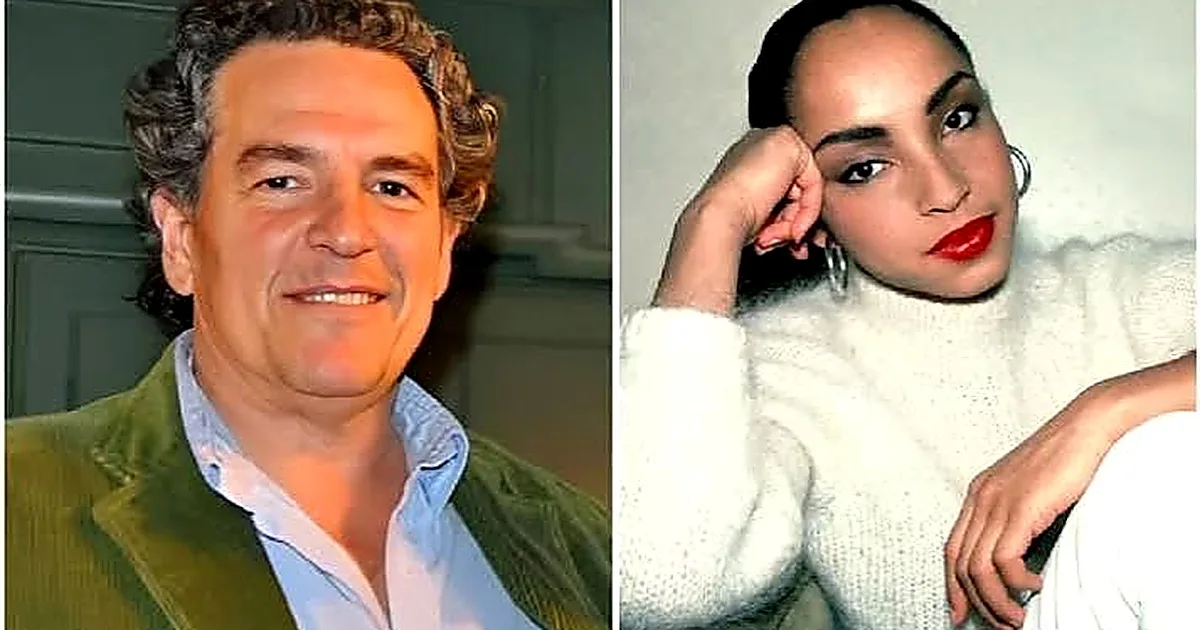
Behind a famous marriage, there is often a working life that search results flatten into a single label, and that is exactly what happens with Carlos Scola Pliego. For years, short profiles have called him only the ex-husband of singer Sade Adu, while inventing an age, a birthplace, a fortune, and sometimes a child that no reliable record supports. This guide separates the film credits that can be checked from the personal details that cannot, so a reader can see both the real career and the limits of the public record.
From continuity work on Spanish films in the late 1970s to assistant directing on international productions in Spain, and then to two African documentaries he directed and wrote, the career of Carlos Scola Pliego was built behind the camera long before his name reached music fans. You will find the verified timeline first, then the meeting with Sade, the marriage and divorce, the later credits, and a clear account of why the most repeated numbers online should not be trusted. Where a fact is not public, this article says so plainly instead of filling the gap with a guess.
| Full name | Carlos Scola Pliego |
| Also credited as | Carlos Scola |
| Nationality | Spanish, based on Spanish film work and Sade biography reporting |
| Profession | Script supervisor, assistant director, documentary director and writer, producer, dialogue coach |
| Known for | Marriage to singer Sade Adu, and behind the camera film work in Spain |
| Marriage | Sade Adu, married 1989, divorce reported as finalized 1995 |
| Children together | None publicly documented |
| Date of birth | Not publicly documented |
| Age | Not reliably published, do not use a single online age as fact |
| Education | Not publicly documented |
| Current residence and work | Not established by recent reliable reporting |
| Net worth | No evidence based public estimate, the repeated $70 million figure is unverified |
| Last widely listed credit | Goal II: Living the Dream, 2007, role described differently across sources |
Who Is Carlos Scola Pliego?
At the simplest level, the answer most search results give is incomplete, because Carlos Scola Pliego is described first as the former husband of Sade Adu and only second, if at all, as a Spanish film professional. That order reverses the real timeline, since film credits for a man called Carlos Scola begin in 1979, about six years before he is reported to have met Sade in Spain during work on her Promise videos. A reader who starts with the marriage misses a decade of production work, and a reader who starts with the credits gets a clearer sense of a working filmmaker who happened to marry a famous singer.
A Name That Means Two Things
One useful clue hides in the credits themselves, because film records usually shorten the name to Carlos Scola, while Sade biographies use the full name Carlos Scola Pliego. For a casual reader, those can look like two people, and that confusion helps explain why some profiles invent a second career or a second identity to fill the gap. The link that ties them together appears in the 1985 miniseries Christopher Columbus, where the assistant director in Spain is credited under the full name, while most other credits use the shorter form. Once that link is seen, the filmography and the marriage story fit together as one life rather than two competing names.
Early Life And What Is Not Public About Carlos Scola Pliego
Early life is the section where competitor articles fail most often, because Carlos Scola Pliego is given a birthplace, a birth decade, a school, and a family background that no primary source in the research for this guide actually confirms. Some pages say Madrid in the early 1970s, others say the United States in the 1960s, and others claim a Madrid film school in the early 1990s, yet those claims cannot all be true, and the film timeline makes at least one of them impossible. A man working as a script supervisor in 1979 could not have been born in the early 1970s and still have been an adult professional at that date, so that particular claim should be rejected outright.
Birth, Family And Education
From the sources checked for this guide, the only early life point that can be stated with reasonable confidence is a Spanish connection, drawn from Spanish film credits, Spanish production work, and consistent identification as a Spanish film director in Sade biography reporting. Beyond that, parents, siblings, childhood town, school, and university are not publicly documented, and this article will not invent them to make a bio box look complete. That restraint may feel frustrating for a reader who wants a full childhood story, but it is more useful than a confident paragraph built on copying, since a copied error then spreads to the next site that cites it.
Namesakes And Invented Identities To Avoid
Turns out, part of the confusion comes from other people and invented profiles sharing a similar name, because searches also return a Mexican business figure, an Argentine educator, and a supposed modern auteur with films dated 2008, 2012, and 2016. None of those identities matches the verified Spanish filmography that runs from 1979 to 2007, and none should be merged into this biography. A reader who sees a business empire, a philosophy doctorate, or a recent feature film attached to this name should check the source carefully, because the name alone is not enough to prove that the same person did all of those things.
From Continuity Work To Assistant Directing
Career is where the verified record is strongest, because Carlos Scola Pliego, credited as Carlos Scola in most film listings, appears in production roles that follow a clear progression from detail work to scheduling and set coordination. That progression matters, since it shows a working professional learning a craft over years rather than a celebrity spouse who appeared suddenly in the film world. A script supervisor learns continuity, an assistant director learns logistics, and a documentary director later uses both skills, so the early credits are not filler, they are the training for the later directing work.
Script Supervisor Years
In the late 1970s, a young filmmaker learning the trade from inside a production would often start where mistakes are easiest to spot, and for Carlos Scola Pliego that starting point appears to be continuity work. Credits associate Carlos Scola with script supervision on La boda del señor cura in 1979 and Opera prima in 1980, two Spanish productions where dialogue, props, costumes, and movement had to match across scenes filmed out of order. That kind of work rarely earns public praise, but it teaches a precise eye, and it is a common entry point for people who later move into assistant directing or directing itself.
International Productions In Spain
By the early 1980s, the work had grown larger and more international, because Carlos Scola Pliego appears in assistant director roles on productions that used Spain as a filming base. Between 1981 and 1985, credits include second assistant director work on Dos y dos, cinco and Black Commando, assistant director department roles on Hundra, G’olé!, and Scarab, and second assistant director for Spain on Never Say Never Again and Curse of the Pink Panther, with those last two entries carrying an uncredited designation in some databases. In 1985, the record adds Eleni and the miniseries Christopher Columbus, both with assistant director work in Spain, and that miniseries credit is the one that uses the full name.
The Documentary Turn In The Career Of Carlos Scola Pliego
After years in production departments, a shift becomes visible in the late 1980s, because Carlos Scola Pliego moves from supporting other directors to directing and writing his own documentary work. That shift is important for two reasons, since it gives him a defined creative voice and it happens just before his marriage to Sade, which means the documentaries should not be treated as a hobby taken up after fame. Both films focus on Africa, both come from the same production setting, and both are short enough in the surviving record to be described carefully rather than praised as lost masterpieces.
Ngira: Gorilas En La Montana
In 1988, a 25 minute Spanish documentary called Ngira: Gorilas en la montaña gave Carlos Scola Pliego a director and writer credit, with production details connecting the shoot to the Democratic Republic of the Congo and a focus on mountain gorillas. Some sources describe him as co-director and producer on this project, while others list him simply as director and writer, so the exact credit split should be treated as slightly unsettled even though the film itself is well documented. What the record does support is a move from logistics to authorship, since a wildlife documentary requires choices about subject, place, and story that an assistant director does not make alone.
Donde Termina El Corazon
A year later, in 1989, a longer documentary called Donde termina el corazón gave Carlos Scola Pliego a director and writer credit for a journey described as ranging from the Ituri Forest to the suburbs of Nairobi. At about 95 minutes, this was a feature length project rather than a short, and research on Spanish documentary cinema has discussed its portrayal of contrasting ways of life while also noting the absence of evidence for a substantial commercial release. That balance matters, because the film is historically traceable without being widely famous, and calling it a box office success or an award winner would go beyond what the sources support.
How Carlos Scola Pliego Met Sade Adu
Meeting Sade is the part of the story that most readers arrive for, and it is also the part where romantic detail is most often invented, because Carlos Scola Pliego and Sade Adu met through work rather than through a celebrity introduction. According to El País reporting on Sade’s Madrid years, three videos connected to her 1985 album Promise had Scola working as an assistant director, which placed him directly in the audiovisual world where Sade was filming in Spain. That professional crossing is the strongest account available, and later additions such as precise first meeting scenes or intimate dialogue should be treated as storytelling rather than verified fact.
The Promise Videos In Spain
In Spain in the mid 1980s, a singer at the height of early fame would have needed local production help, and for Carlos Scola Pliego that help was already his job. Sade had become internationally known after Diamond Life and the single Smooth Operator, and she was filming videos in Spain with director Brian Ward for the Promise period. A Spanish assistant director working on those videos would have been part of schedules, locations, and set coordination, which is a plausible and ordinary way for two creative professionals to meet. That ordinary explanation is stronger than a dramatic chance encounter, because it fits both careers at that exact moment.
The Wedding Date Dispute
When the formal marriage is discussed, a useful lesson in source checking appears, because Carlos Scola Pliego and Sade Adu certainly married in 1989, but sources disagree on the exact day and month. IMDb lists February 11, 1989, while El País describes an October 1989 wedding, and Sade’s official biography confirms only the year. Some profiles also describe a Spanish castle ceremony, but a clearly identified venue does not appear in the strongest sources reviewed, so the setting should be described as reported rather than named as settled fact. For this guide, 1989 is the defensible answer, and any article that presents one exact date without mentioning the dispute is hiding a real uncertainty.
Marriage, Separation And Divorce
Marriage is where a short lived together period and a long legal timeline are often confused, because Carlos Scola Pliego and Sade Adu are reported to have separated roughly a year after marrying, while the divorce was not finalized until 1995. That gap matters for every later claim about the relationship, since a marriage that lasted six years on paper did not necessarily mean six years of living together. A reader who only sees 1989 to 1995 will picture a long partnership, while a reader who also sees the early separation will picture a brief marriage with a slow legal ending, and the second picture matches the reporting more closely.
A Short Time Together, A Long Legal End
From the reporting checked for this guide, the pattern is consistent in outline even when details differ, because Carlos Scola Pliego and Sade Adu married in 1989, settled for a time in Madrid, and then separated with Sade returning to London. Sade has spoken in general terms about the emotional toll of the ending and about needing years to move past it, but she has not given a detailed public explanation that names a single cause, and no comparable public statement from him exists. The divorce settlement, if any financial terms were agreed, has never been made public, so any article that quotes a settlement figure is inventing a document that has not been produced.
The Children Question, Answered Carefully
One of the most persistent errors in this topic is the claim that Carlos Scola Pliego and Sade Adu had a child together, and that claim should be corrected plainly. No reliable biography identifies a child from their marriage, and Sade’s child, Izaak Theo Adu, was born in July 1996, after the marriage had ended, during her later relationship with Jamaican music producer Bob Morgan.
That timeline alone rules out parentage in the marriage, and it also explains why some pages confuse the families, since they place Sade’s later child beside the earlier husband’s name without explaining the dates. There is also no trustworthy public evidence reviewed here showing that Carlos Scola Pliego has children from another relationship, so the careful answer has two parts, and both parts should be kept separate.
Read also: Ayana Tai Cheadle: Age, Family, Career and Net Worth 2026
Later Credits And Life After The Divorce
Later life is often described as a disappearance, but the film record tells a slightly different story, because Carlos Scola Pliego appears in credits after the divorce and long after the marriage ended. That distinction matters, since a decline in publicity is not the same as a sudden end to work, and a reader who believes he vanished in 1995 will miss the later projects that complicate that claim. At the same time, the later credits are sparse and specialist in nature, so they should not be used to invent a second career or a current job that no recent source documents.
Goal II In 2007 And A Role That Varies By Source
In 2007, the last widely listed credit for Carlos Scola Pliego appears on Goal II: Living the Dream, a sports drama shot partly in Spain, but the role itself is described differently across sources. One filmography overview lists him as a dialogue coach, while other summaries describe the credit more generally as additional crew, and that difference should be noted rather than smoothed over. Dialogue coaching is specialist language work, helping performers with pronunciation, accent consistency, or delivery, while additional crew is a broader label, so the two descriptions are not identical. For this guide, the safe statement is that a 2007 credit exists on that film, while the precise role description remains source dependent.
Carlos Scola Pliego Net Worth And The 70 Million Problem
Net worth is the section where competitor articles are most misleading, because Carlos Scola Pliego is repeatedly given a figure of $70 million, sometimes with a 2025 date attached, and no income record, company ownership, property, investment, or divorce settlement is ever shown to support it. That figure appears on page after page, yet the better researched guides say plainly that no evidence based public estimate exists. Repetition is not evidence, and a number that is copied often enough can start to look official even when it began as a guess.
Where The 70 Million Figure Comes From
From the pattern in the research, the $70 million figure seems to travel with the marriage rather than with the filmography, because Carlos Scola Pliego worked in behind the camera roles that are not typically associated with that level of personal wealth. Some pages place his fortune just below Sade’s reported fortune, which makes the number feel plausible by comparison, but comparison is not calculation. No page reviewed here explains how the figure was reached, what years it covers, or what assets it includes, and that missing method is itself a warning sign. Until a financial disclosure or credible reporting appears, the figure should be treated as conjecture, not as a fact to repeat.
What Film Credits Can And Cannot Prove
A filmography can prove work, but it cannot prove wealth, because Carlos Scola Pliego was paid, if at all, per project and in roles that varied widely in seniority and budget. Assistant director work on a large international production is not the same as directing a major studio film, and a short documentary is not the same as a commercial hit, so credits alone cannot be turned into a bank balance. That point also applies to the later producer and dialogue coach credits, which show continued professional participation without revealing income. The honest financial summary is therefore short, with work confirmed, earnings not disclosed, and net worth not publicly known.
What Competitor Articles Miss About Carlos Scola Pliego
After reading the top competitor articles side by side, a clear pattern emerges, and that pattern is the unique angle for this guide, because most pages either invent a biography or stop at the marriage. The best pages already warn that age, net worth, and current life are unknown, but even those pages rarely explain the name link, the separation versus divorce gap, or the later credits that contradict the disappearance story. Fixing those gaps does not require new gossip, it requires reading credits carefully and treating a missing fact as a fact about the record itself.
The Name Link In Christopher Columbus
Here is where it gets interesting, because the strongest identity check in this whole topic is not a birth certificate, it is a credit line. In Christopher Columbus, the assistant director in Spain is credited as Carlos Scola Pliego, while most other film listings use Carlos Scola, and that single full name credit connects the shortened filmography to the full name used in Sade biographies. Most competitor articles never mention this link, so they either treat the two names as separate people or they assert the connection without showing why it is reasonable. By naming the link, this guide gives readers a reason to trust the combined timeline rather than asking them to take it on faith.
Quick Facts And Timeline For Carlos Scola Pliego
For readers who want the whole story in one glance, the timeline below pulls the verified and reported milestones together in order, and it also shows where the record goes quiet. Use it as a checklist while reading the sections above, because each date here is explained in more detail in its own part of the article.
Here are the key milestones in order:
- 1979: Script supervision work on La boda del señor cura, credited as Carlos Scola.
- 1980: Script supervision work on Opera prima.
- 1981 to 1985: Assistant director work, including international productions filmed partly in Spain.
- 1985: Assistant director work on Eleni and Christopher Columbus, and work on Promise period videos in Spain.
- 1988: Director and writer on Ngira: Gorilas en la montaña, a 25 minute documentary.
- 1989: Director and writer on Donde termina el corazón, and marriage to Sade Adu in 1989, exact day disputed.
- About 1990: Separation reported roughly a year after the wedding, with Sade returning to London.
- 1995: Divorce reported as finalized.
- 1996: Sade’s child Izaak Theo Adu is born during her later relationship with Bob Morgan, not during this marriage.
- 2001: Producer role listed on Capitães da Areia.
- 2007: Last widely listed credit on Goal II: Living the Dream.
- After 2007: No verified professional or personal updates in recent reliable reporting.
Personal Review
Reading this biography as a whole, what stays with me is not the marriage, but the discipline of the early career, because Carlos Scola Pliego appears as a working filmmaker who learned continuity, then logistics, then directing, in that order. That progression feels honest and human, since it shows a person building skill over a decade rather than arriving fully formed through a famous relationship. The documentaries, small and African in focus, are the most personal part of the record, and they suggest a creative interest that had nothing to do with pop fame, even though they were made at the very moment his private life was about to become public.
What surprised me most was how much better the story becomes once invented detail is removed, because the remaining facts are enough to hold a reader’s attention without exaggeration. A Spanish assistant director on a Bond film, a documentary maker in Central Africa, a husband in Madrid, and then a private man with a few later credits is a complete arc, even if it ends in silence rather than in a comeback. If there is a weakness in the public record, it is the lack of interviews or personal writing that would let readers hear his own voice, but that weakness is a consequence of privacy, not a flaw to be fixed with rumors.
FAQs About Carlos Scola Pliego
These are the questions that appear most often in search results, and the answers below use the same careful approach as the main article, with confirmed facts separated from estimates and rumors.
Who Is Carlos Scola Pliego?
Carlos Scola Pliego is a Spanish film professional who worked as a script supervisor, assistant director, documentary director and writer, producer, and later in a specialist role on Goal II: Living the Dream. He is best known publicly as the only man singer Sade Adu has ever married, but his film credits begin in 1979, years before that marriage.
When Did Carlos Scola Pliego Marry Sade Adu?
Carlos Scola Pliego married Sade Adu in 1989, a year confirmed by Sade biography reporting, while the exact day and month remain disputed between February 11 and October in different sources. The couple are reported to have separated roughly a year after the wedding, with the divorce finalized in 1995.
Did Carlos Scola Pliego And Sade Adu Have Children?
No, Carlos Scola Pliego and Sade Adu had no publicly documented children together during their marriage. Sade’s child Izaak Theo Adu was born in July 1996, after the marriage had ended, during her later relationship with Bob Morgan, so that child is not connected to Carlos Scola Pliego as a parent.
What Films Did Carlos Scola Pliego Work On?
Carlos Scola Pliego worked in assistant director roles on productions including Never Say Never Again, Curse of the Pink Panther, Hundra, Scarab, Eleni, and the miniseries Christopher Columbus, and he directed and wrote Ngira: Gorilas en la montaña in 1988 and Donde termina el corazón in 1989. Later listings include Capitães da Areia in 2001 and Goal II: Living the Dream in 2007.
What Is Carlos Scola Pliego Age?
Carlos Scola Pliego age is not reliably published, because no credible primary source gives a date of birth in the research for this guide. Any single age found online should be treated as a guess, especially a Madrid birth in the early 1970s, which conflicts with his 1979 professional credits.
What Is Carlos Scola Pliego Net Worth?
Carlos Scola Pliego net worth has no evidence based public estimate, and the repeated $70 million figure found on many biography sites is unverified. No income record, asset list, or divorce settlement has been produced to support that figure, so the responsible answer is not publicly known.
Where Is Carlos Scola Pliego Now?
Carlos Scola Pliego current residence and work are not established by recent reliable reporting, and his last widely listed credit dates to 2007. No verified interview, social media presence, or professional update was found in the research for this guide, so any specific claim about his present life should be treated with caution.
Is Carlos Scola Pliego Still Alive?
Carlos Scola Pliego death has not been confirmed by any credible obituary or official statement found in the research for this guide. In the absence of such a report, his current status should be described as undocumented rather than confirmed in either direction.
Final Words
When the film credits, the marriage record, and the invented profiles are put together, a clearer picture of Carlos Scola Pliego finally emerges, and it is a picture of a private working filmmaker rather than a celebrity fortune or a modern auteur. From continuity work in 1979 to assistant directing on international productions in Spain, from two African documentaries in 1988 and 1989 to later credits in 2001 and 2007, the career follows a logical path that makes sense once the credits are read in order. The marriage to Sade Adu in 1989, the reported separation about a year later, and the divorce finalized in 1995 add a human chapter to that career, without turning the whole life into a single relationship.
For readers, the lesson is to trust credits over bio boxes, to check dates against the timeline, and to separate legal marriage years from lived together years, because those habits will help with every celebrity profile, not just this one. Age is not reliably published, net worth is not publicly known, children together are none publicly documented, and current life after 2007 is undocumented, and those limits are not a failure of research. They are the result of a person choosing privacy in a world that rewards exposure, and that choice deserves respect, even when it leaves searchers with fewer answers than they wanted.
Read also: Frances Cain: Age, Family, Career and Net Worth 2026