

She won the American Book Award before most people knew her name. Asake Bomani spent 25 years building a marriage alongside one of Hollywood’s most respected actors. But the credential that matters most to her story has nothing to do with him. Asake Bomani is an American author, former jazz singer, cultural advocate, and the former wife of actor Danny Glover.
She was born on July 1, 1945, in Wilmington, Delaware. She studied English at San Francisco State University, built a career through music and literature. Founded the Bomani Gallery in San Francisco, and published the landmark work “Paris Connections: African American and Caribbean Artists in Paris” in 1991. Which earned her the American Book Award in 1993. She and Danny Glover were married from 1975 to 2000 and have one daughter, Mandisa Glover.
Most articles about Asake Bomani get pulled immediately into her marriage and divorce. They mention the book as a footnote. This article reverses that order, because anyone who reads Asake Bomani’s actual story quickly realizes the marriage is the secondary chapter. The literary and cultural work is what she built on her own.
Quick Facts: Asake Bomani
| Detail | Information |
| Full Name | Asake Bomani |
| Date of Birth | July 1, 1945 |
| Birthplace | Wilmington, Delaware, USA |
| High School | George Washington High School, San Francisco |
| University | San Francisco State University (B.A. English, 1963) |
| Early Career | Jazz singer, San Francisco |
| Gallery | Bomani Gallery, San Francisco, California |
| Major Work | “Paris Connections: African American and Caribbean Artists in Paris” (1991) |
| Award | American Book Award, 1993 |
| TV Appearance | BBC “Great Railway Journeys” (1999) |
| Married | Danny Glover, 1975 |
| Divorced | 2000 |
| Daughter | Mandisa Glover (b. 1976) |
| Current Status | Private life |
Who Is Asake Bomani? Beyond the “Danny Glover’s Ex-Wife” Label
Asake Bomani is an American cultural figure whose contributions to African American literary history predates and outlasts her marriage to any Hollywood figure. She is a celebrated American author whose work highlights her passion for storytelling and social justice.
Her notable book, “Paris Connections: African American Artists in Paris,” explores the lives and experiences of African American artists who found creative refuge and inspiration in Paris. Her name, Asake, originates from the Yoruba culture of Nigeria, a heritage detail she has carried with pride throughout her life. This cultural pride is a recurring theme in her work and personal life, as she has often used her platform to celebrate African and African American identities.
Born in Wilmington, Delaware, in 1945, Asake Bomani grew up during a pivotal era of American history. Her journey took her from the East Coast to the vibrant cultural hub of San Francisco, where she attended San Francisco State University. That move from Delaware to California was not incidental. It placed her in one of the most intellectually active cities in mid-century America, at one of its most socially and artistically charged universities, at exactly the right moment.
Asake Bomani’s Early Life and Education: The Foundation Everything Else Was Built On
From Delaware to San Francisco
Asake Bomani was born on July 1, 1945, in Wilmington, Delaware. Raised in an African American family, she grew up during a time of significant social change in the United States. Wilmington in the 1940s and 1950s was not a quiet place culturally. The city had a substantial African American population and a strong tradition of community organizing and intellectual life that shaped a generation of thinkers and artists.
After finishing her early schooling at George Washington High School, Asake Bomani went on to study at San Francisco State University. She majored in English and completed her degree in 1963, showing her early dedication to literature and cultural studies.
San Francisco State University and the Student Strike Generation
This detail about San Francisco State deserves specific context that most articles skip entirely. San Francisco State University was a hotbed for student activism and the site of the longest student strike in the U.S. History, which led to the establishment of the first Black Studies department. Asake was part of a generation that shaped that conversation.
Students at SFSU in the early 1960s were engaging with questions of race, identity, and cultural representation that would define American intellectual life for decades. Her English degree was not acquired in a vacuum. It was built during years of genuine intellectual ferment, surrounded by peers and professors who treated culture as a form of activism. That context flows directly into everything she later wrote and advocated.
Asake Bomani’s Career as a Jazz Singer: The Part Most Articles Mention but Never Explain
Music as Cultural Expression
Before becoming an author, Asake Bomani had a successful career as a jazz singer. Her soulful voice captured the hearts of many, allowing her to convey emotions and stories that resonated deeply with audiences. Jazz in San Francisco during the 1960s was not peripheral. The city was a center for artistic experimentation, with venues across the Bay Area hosting performers who treated music as intellectual and political statement as much as entertainment.
Asake Bomani began performing as a jazz singer in San Francisco’s vibrant music scene. The city was a center for artistic experimentation, and Asake quickly became known for her soulful and expressive voice. Her performances carried emotional depth and cultural pride, often reflecting the experiences of African American women and the broader struggle for identity. In a People article, Danny Glover revealed that he was always infatuated with Bomani who was a jazz singer, adding that she had a strong sense of morality.
That quote reveals something important. He was not drawn to a woman who decorated the edges of someone else’s career. He was drawn to a performer, a woman with a creative identity of her own.
From Stage to Page: The Transition That Defined Her
Asake’s time as a jazz singer helped her develop an understanding of how music, like literature, could serve as a powerful tool for social and cultural expression. This formative period in her life informed much of her later work, especially her advocacy for African American artists and cultural preservation.
The move from musical performance to writing was not a retreat. It was a deliberate pivot toward a form with greater permanence. A jazz performance disappears when the last note ends. A book stays. Asake understood that distinction and acted on it.
The Bomani Gallery: The Institution Nobody Talks About
Here is the detail most articles either bury or miss entirely. Asake Bomani did not simply write about art. She created institutional space for it. Asake Bomani co-founded the Bomani Gallery in San Francisco, California. The gallery bore her name and operated as a real physical space for African American art and cultural exchange. The full title of her landmark book references the gallery directly: “Paris Connections: African American Artists in Paris” was published by the Bomani Gallery.
Think about what it takes to run an art gallery in San Francisco. You need curatorial judgment, community relationships, financial management, and the ability to identify emerging artists worth showing before the mainstream notices them. Asake Bomani did all of that. The gallery was not a hobby or a vanity project.
It was the institutional expression of her cultural advocacy, and it gave her the platform, the connections, and the expertise that made “Paris Connections” possible. This is the unique angle that almost no article about Asake Bomani explores. She was not a writer who happened to care about art. She was a gallery operator, a curator, and an institutional builder. Her book emerged from that infrastructure. The American Book Award was the recognition that followed years of foundational institutional work.
“Paris Connections”: The American Book Award That Defined Asake Bomani’s Literary Legacy
What the Book Actually Is
One of Asake Bomani’s key literary achievements is her acclaimed work “Paris Connections,” which highlights African American and Caribbean artists in Paris. The book, published in 1991 or 1993 depending on the edition, won her the American Book Award, solidifying her place in the literary world.
The work explores the lives of African American and Caribbean artists who sought inspiration, refuge, and community in Paris, particularly in the early to mid-20th century. Paris held a specific meaning for African American artists that European cities generally did not. Through a detailed examination of key figures such as Josephine Baker, James Baldwin, and Richard Wright.
Asake explores the unique cultural exchange that occurred in Paris during this time. These artists were not only pioneers in their respective fields but also critical players in the fight for racial equality and cultural recognition.
Why This Book Mattered Then and Still Matters Now
Bomani’s exploration of the African American expatriate experience serves as both a historical account . And a reflection on the cultural and artistic exchange between the United States and Europe. She underscores the significance of this global movement, showing how it transcended national borders and laid the groundwork for future generations of artists and intellectuals. African American artists went to Paris for a reason that was entirely practical before it was romantic:
The city offered relative freedom from the racial violence and systemic exclusion that defined daily life in the United States. Josephine Baker became a superstar in France decades before Black American artists received comparable recognition at home. James Baldwin lived in Paris for years specifically because he could think, write, and live there with a freedom that New York did not permit.
Asake Bomani documented this phenomenon with the rigor of a researcher and the passion of someone who understood it from the inside. The American Book Award, established in 1978 by the Before Columbus Foundation to recognize and celebrate. The multicultural diversity of American literature is not an honorary credential. It is given to books that make genuine contributions to American letters. Receiving it placed Asake Bomani’s work in the company of writers who shaped American cultural discourse.
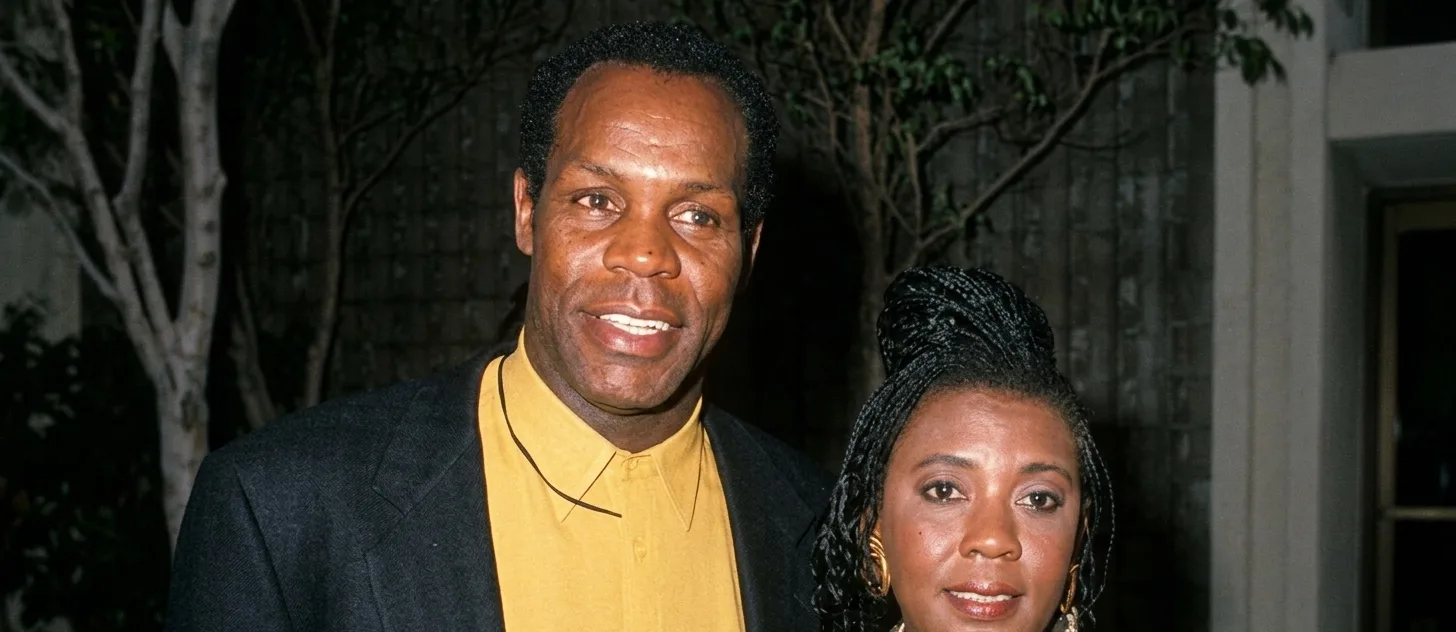
Asake Bomani and Danny Glover: 25 Years, One Daughter, and a Story Built on Shared Values
How They Met at San Francisco State
The relationship Danny Glover had with his ex-wife Asake Bomani is one that could be described as special. From the moment he first saw her, the actor and political activist knew she was meant for him. He was in college at the time and spotted her. Being shy to approach Bomani, Glover stood outside her English class and waited for her to come outside. When she did, he said hi to her and walked away.
Glover, an economics student with a passion for acting, was reportedly infatuated with Bomani, an English major and singer. He admired her strong sense of self and morality. The two were not thrown together by celebrities. They were thrown together by proximity, shared intellectual passion, and the kind of mutual recognition. That happens when two people who care about the same things meet in a room where those things matter.
Supporting Glover’s Leap Into Acting
Bomani backed her man when he quit his job as an evaluator to join the Black Actors’ Workshop of the American Conservatory Theatre in the 1970s. Supporting him all through the way and reaping the success that came years later. This decision by Danny Glover was a genuine financial and professional risk. Leaving a stable government position to pursue acting at the Black Actors’ Workshop, a training program operated by the American Conservatory Theater in San Francisco.
Which required faith in himself and support from the people around him. Asake provided that support. She understood creative risk because she had taken her own. A jazz singer who transitions to literary advocacy is not someone who defaults to the conservative choice.
Mandisa Glover and the Values Asake Passed Forward
Together they built a life centered on mutual respect, love, and intellectual connection. Their only daughter, Mandisa Glover, was born in 1976, and the couple worked together to give her a grounded and nurturing upbringing.
Asake’s parenting philosophy prioritized independence, education, and cultural roots pride. She thought that knowing one’s identity held the secret to leading a life of significance. Mandisa, who became involved in the culinary and entertainment industries as an adult.She has credited her mother publicly and specifically for shaping her character and professional direction.
The Divorce and What It Was Not
Glover filed for divorce from Bomani on February 4, 1999, citing irreconcilable differences. The divorce was finalized in 2000. The 25-year marriage ended without the kind of public acrimony that defines so many celebrity divorces. Both parties have spoken about each other with respect in subsequent years.
The marriage produced a daughter, a body of shared advocacy work, and a mutual legacy that neither has felt the need to undermine.
Asake Bomani’s Television Appearance and Ongoing Privacy
While Asake Bomani did not actively pursue a media career, she briefly appeared on television in 1999 in the BBC travel documentary series “Great Railway Journeys.” This experience introduced her to a broader audience, but she never made media appearances a focus of her life.
“Great Railway Journeys” was a long-running BBC documentary series in which notable figures traveled iconic train routes and reflected on the cultural landscapes they passed through. Asake’s appearance was consistent with her identity as a cultural commentator and traveler interested in the world beyond celebrity.
It was not a self-promotional exercise. It was a natural extension of the same intellectual curiosity that produced “Paris Connections.”Since her divorce, Asake Bomani has maintained a complete absence from public life. She has no known active social media accounts. She has not given interviews. She has not sought to monetize her connection to Danny Glover’s continued fame. As of 2026, she is 80 years old and lives quietly, by every available account, exactly the way she has chosen to live since the turn of the millennium.
The Unique Angle: Asake Bomani as Cultural Infrastructure Builder
Every article about Asake Bomani describes her as an author and cultural advocate. None of them adequately explains what that actually means structurally. Culture does not preserve itself. It requires people who build the institutions, spaces, and archives that keep it alive. Asake Bomani ran a gallery. She researched African American artists working in Paris at a time when that history was not being systematically documented.
She edited and published a book through that gallery. She won an award that validated the work as a significant contribution to American letters. That is not the biography of someone who drifted into writing because her husband was famous. It is the biography of a cultural institution builder who understood that African American artistic history required active preservation work. The Bomani Gallery, “Paris Connections,” and the American Book Award together represent a coherent life project, one that was entirely her own.
FAQ: Everything People Actually Search About Asake Bomani
Who is Asake Bomani?
Asake Bomani is an American author, former jazz singer, art gallery founder, and cultural advocate born on July 1, 1945, in Wilmington, Delaware.
She is best known for her 1991 book “Paris Connections: African American and Caribbean Artists in Paris,” which won the American Book Award in 1993. She was also married to actor Danny Glover from 1975 to 2000.
What book did Asake Bomani write?
Asake Bomani wrote “Paris Connections: African American and Caribbean Artists in Paris,” published in 1991 through the Bomani Gallery in San Francisco. The book documents the experiences of African American and Caribbean artists, including figures like Josephine Baker, James Baldwin, and Richard Wright. Who found creative freedom and community in Paris. It won the 1993 American Book Award.
What award did Asake Bomani win?
Asake Bomani won the American Book Award in 1993 for “Paris Connections: African American and Caribbean Artists in Paris.” The American Book Award is given by the Before Columbus Foundation to recognize works that contribute to the multicultural diversity of American literature. It is a prestigious literary honor, not an honorary or ceremonial prize.
Where did Asake Bomani go to college?
Asake Bomani attended San Francisco State University, where she majored in English and graduated in 1963. It was at San Francisco State that she met Danny Glover and developed the intellectual and cultural interests that defined her later career as a writer, gallery operator, and cultural advocate.
Was Asake Bomani a jazz singer?
Yes. Before her career as an author and gallery operator, Asake Bomani performed as a jazz singer in San Francisco’s music scene. She was known for her soulful, expressive voice and her ability to communicate cultural themes through music. Danny Glover has cited her jazz career as part of what attracted him to her when they first met as students.
How long were Asake Bomani and Danny Glover married?
Asake Bomani and Danny Glover were married for 25 years, from 1975 to 2000. Danny Glover filed for divorce on February 4, 1999, citing irreconcilable differences. The divorce was finalized in 2000. They have one daughter together, Mandisa Glover, born in 1976.
Does Asake Bomani have children?
Asake Bomani has one daughter, Mandisa Glover, born in 1976 during her marriage to Danny Glover. Mandisa has been active in the culinary and entertainment industries as an adult and has spoken publicly. About the strong influence her mother had on her values, independence, and sense of cultural identity.
What was the Bomani Gallery?
The Bomani Gallery was an art gallery in San Francisco, California, that Asake Bomani co-founded and operated. It served as a platform for African American art and cultural exchange. The gallery also functioned as a publisher: “Paris Connections” was published through the Bomani Gallery, making Asake’s literary and institutional work directly connected.
Did Asake Bomani appear on television?
Yes. Asake Bomani appeared in the BBC travel documentary series “Great Railway Journeys” in 1999. The series featured notable figures traveling iconic train routes and reflecting on the cultures they encountered. It was her most visible television appearance and reflected her interest in travel, culture, and storytelling.
What is Asake Bomani doing now?
As of 2026, Asake Bomani is 80 years old and lives a private life. She has not maintained active social media accounts, given public interviews, or appeared at public events since her divorce from Danny Glover was finalized in 2000. Her daughter Mandisa occasionally posts about her on social media, offering the most visible glimpses into Asake’s current life.
Asake Bomani’s Legacy: Built in Ink, Not in Headlines
Asake Bomani earned an American Book Award before most people who search her name today were born. She ran a gallery, preserved a chapter of African American literary history, supported a future Hollywood star. Through the years before he was famous, raised a daughter who credits her as a foundational influence, and then chose privacy over platform without apology.
The story that matters is not the 25-year marriage to Danny Glover. The story that matters is a woman from Wilmington who arrived in San Francisco. She started singing jazz, started running a gallery, started writing history, and won a major literary award. And then spent the second half of her life exactly as she wanted to, quietly and on her own terms. That is the full biography of Asake Bomani.