
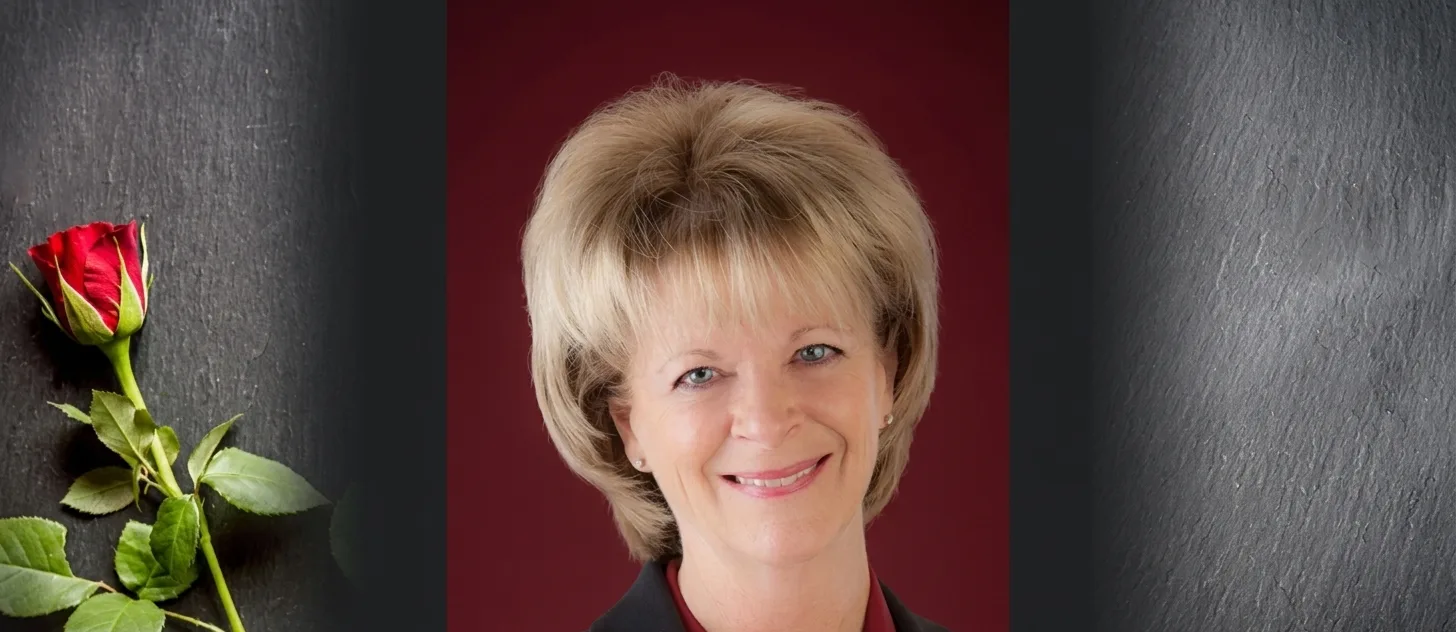
Before Noriyuki “Pat” Morita ever said “wax on, wax off” on a movie screen. There was a woman supporting him through poverty, uncertainty, and a string of years when his dreams looked more like delusions than a career plan. That woman was Kathleen Yamachi. She was Pat Morita’s first wife, his partner through 14 years of struggle in Sacramento, and the mother of his daughter Erin. She never sought attention. She never wrote a book about it. And yet her influence runs quietly through one of the most beloved careers in American film history.
Kathleen Yamachi married Pat Morita on June 13, 1953, when he was 21 and she was approximately 27. They divorced in 1967, two decades before The Karate Kid turned Morita into a global icon. Their daughter Erin once described her mother as the base of her father’s pyramid. That phrase tells you everything you need to know about who Kathleen Yamachi actually was.
Quick Facts: Kathleen Yamachi
| Detail | Information |
| Full Name | Kathleen Yamachi |
| Birth Year | Approximately 1925 or 1926 |
| Birthplace | California, USA |
| Ethnicity | Japanese-American |
| Spouse | Pat Morita (Noriyuki Morita), married June 13, 1953 |
| Marriage Duration | 1953 to 1967 (14 years) |
| Children | Erin Morita (born approximately 1954) |
| Occupation | Clerical worker; bookkeeper |
| Post-Divorce Life | Private; relocated to Northern California |
| Public Profile | None; no interviews, no social media |
| Later Career | Small home-based bookkeeping service |
| Known For | First wife of actor Pat Morita |
Who Was Kathleen Yamachi?
Kathleen Yamachi was a Japanese-American woman born around 1925 or 1926 in California. She is best known as the first wife of actor Noriyuki “Pat” Morita, who later became famous as Mr. Miyagi in The Karate Kid (1984). She married Morita in 1953, supporting him through his most difficult and financially unstable years. Raised their daughter Erin, and divorced in 1967, nearly two decades before Morita’s career-defining breakthrough.
She lived privately after the divorce and never sought public attention connected to her former husband’s fame. That is the documented core of her story. Everything that follows is context worth having.
Growing Up Japanese-American in an Era That Made Survival Itself a Challenge
Kathleen Yamachi grew up in California during the 1930s and 1940s, two of the hardest decades in modern American history for families of Japanese descent. The Great Depression reshaped the economic reality of the entire country. Then World War II created a specific crisis for Japanese-Americans.
In 1942, the United States government issued Executive Order 9066. Which led to the forced incarceration of approximately 120,000 people of Japanese descent into what the government called “relocation centers.” The Densho Encyclopedia and Britannica both document the scale and impact of this policy. Families lost homes, businesses, and property. Children grew up in camps behind barbed wire. Community bonds were severed overnight. Kathleen Yamachi came of age inside this context.
The specific details of her family’s experience during this period are not publicly documented, but the historical framework matters deeply. Every Japanese-American family in California in the early 1940s was affected by internment. Forced relocation, discrimination, and the social stigma that persisted well into the postwar years. Kathleen’s later reputation for steadiness, patience, and resilience almost certainly had its roots in navigating a childhood shaped by those realities.
What This Context Means for Understanding Her Marriage
When Kathleen Yamachi met Pat Morita in early 1950s Sacramento, they were not simply two young people falling in love. They were two Japanese-Americans building a life together in a country that had imprisoned their community less than a decade earlier. Opportunities were limited.
Social acceptance was conditional. The cultural weight on their household was not background noise. It was the daily weather. Pat Morita’s own story makes this vivid. He spent his earliest years in a body cast due to spinal tuberculosis.
Then emerged from hospital care only to be escorted by an FBI agent to join his family at the Gila River internment camp in Arizona. He was later moved to the Tule Lake camp near the California-Oregon border. These were the formative experiences of the man Kathleen married in 1953. Understanding what they both carried into that marriage changes how you read the entire story.
Meeting Pat Morita and the Marriage That Started in a Restaurant Apartment
Kathleen Yamachi met Noriyuki “Pat” Morita in the early 1950s in Sacramento, California. Morita, born June 28, 1932, in Isleton, California, was working at his family’s restaurant at the time. He had recently returned from the health institutions that had occupied most of his childhood. He was funny, ambitious, and completely without direction in the conventional sense. He was 21. She was approximately 27.
The six-year age difference meant Kathleen brought maturity to the relationship at a moment when Morita was still working out who he wanted to be. They shared a Japanese-American background, shared memories of community hardship, and apparently shared enough mutual understanding to commit to building a life together. They married on June 13, 1953. They lived in a small apartment above the Morita family’s restaurant in Sacramento.
Money was tight by every account. Kathleen took clerical and part-time office jobs to keep the household stable. Pat worked at the restaurant while beginning to tell jokes for customers, testing material, and quietly shaping the instinct that would eventually become a stand-up comedy career.
Life in Sacramento: No Glamour, All Foundation
Think about what this looked like day to day. A young couple, neither of them famous, neither of them wealthy, living above a restaurant in postwar Sacramento. Pat is joking for diners between shifts. Kathleen is keeping the books stable with her own income. There are no television cameras, no agents, no industry connections. There is just the work, the apartment, and the belief that this somehow leads somewhere better.
That belief required patience. And patience, in a marriage built during those specific circumstances. Required an unusual amount of trust and commitment from both people involved. Kathleen Yamachi supplied both for 14 years.
How Kathleen Yamachi Supported Pat Morita’s Career Transition
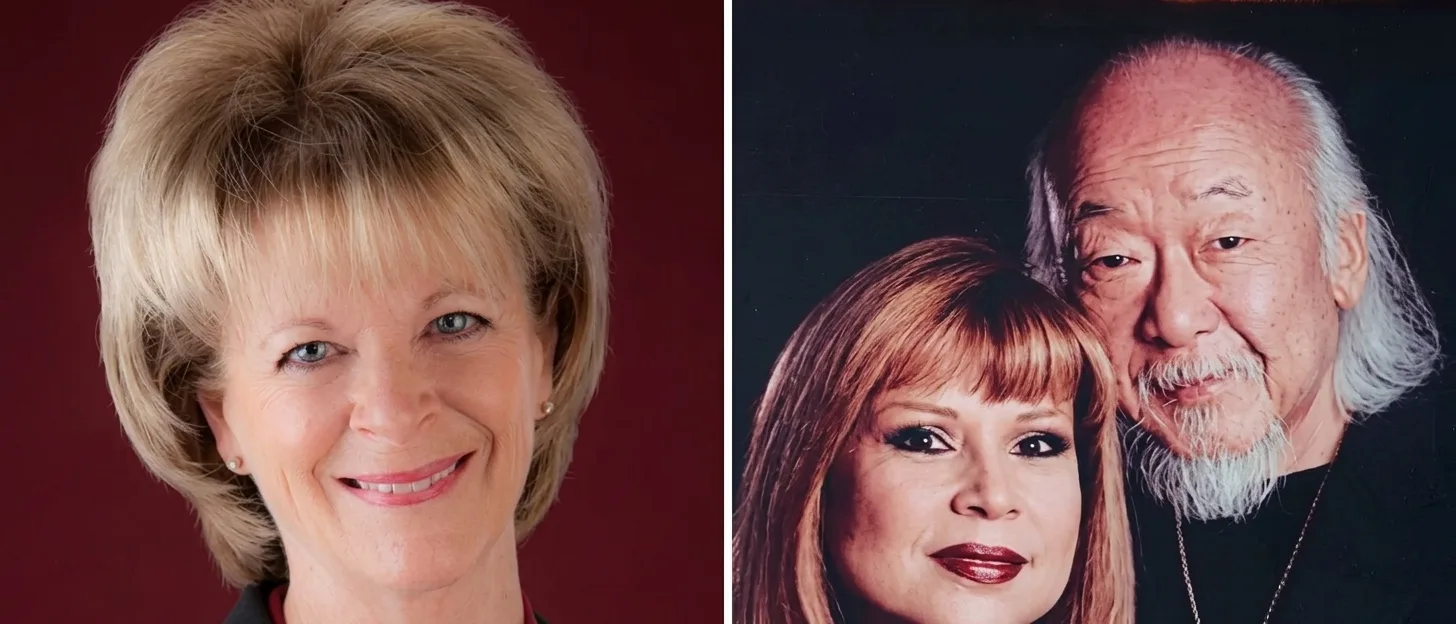
Pat Morita’s career did not follow a simple arc. According to the documentary More Than Miyagi: The Pat Morita Story (2021, directed by Kevin Derek). Morita went through several distinct professional phases before comedy became his primary identity. He worked at the restaurant. He then moved into aerospace industry employment, which paid better and offered more stability.
And throughout these transitions, he kept performing, kept seeking opportunities. And he kept running headlong into the walls that the Hollywood of the 1950s and early 1960s erected around Asian-American performers. In a clip included in the documentary, Morita explained his path: “Between experiencing a first family and raising a child and working at the restaurant.
I wanted a so-called regular job, a real job that paid real money and I found my way into working at what became a giant in the aerospace industry.” That language, “experiencing a first family,” places Kathleen and Erin at the center of one of his pivotal life decisions. She provided the household stability that made his risk-taking possible. When Pat left the restaurant for the aerospace sector, Kathleen adjusted.
When he eventually left aerospace to pursue entertainment full-time, she supported that shift too, despite the genuine financial uncertainty it created. Her clerical and bookkeeping work kept the family functioning during his lowest-income years.
The Rarity of That Kind of Support in 1950s America
The cultural context here matters and most other articles on Kathleen Yamachi ignore it entirely. In 1950s America, the idea of a wife sustaining a household financially while her husband pursued an entertainment career that offered zero guarantees was not socially endorsed. It was, in most circles, considered reckless. For a Japanese-American couple navigating postwar America. The pressure to demonstrate conventional stability was even more acute. Kathleen did not perform conventional stability.
She quietly built it while simultaneously giving Pat room to be unconventional. That combination, steady practical support paired with genuine belief in an uncertain dream, is genuinely rare. Pat Morita acknowledged it. His daughter Erin acknowledged it more directly. The phrase “the base of Dad’s pyramid” is not a polite tribute. It is an accurate structural description.
Erin Morita: The Daughter Kathleen Raised
Kathleen Yamachi and Pat Morita had one child together. Erin Morita was born in approximately 1954, the year after their marriage. She was raised primarily by Kathleen, who handled the daily realities of parenting while Pat spent increasing amounts of time away, building his comedy career.
In a 2010 essay published in Hyphen magazine, Aly Morita, Pat’s daughter from his second wife Yukiye Kitahara, wrote about the dynamics of Pat’s marriages and family. Her account confirmed key details about Kathleen’s age at the time of the marriage and the general contours of their relationship.
It is one of the few documented family perspectives on Kathleen that exists in the public record. Erin grew up knowing her mother as someone who kept the household functional and emotionally grounded during years when her father was absent for extended periods. Kathleen’s parenting was not high-profile. It was consistent, present, and oriented toward giving Erin a stable foundation regardless of what was happening in Pat’s professional world.
The Divorce in 1967 and What Actually Caused It
Kathleen Yamachi and Pat Morita divorced in 1967, after 14 years of marriage. The documented reason, referenced across multiple sources and consistent with Morita’s own characterizations of his early adult life. She was the strain created by his growing career demands and extended absences from home. The divorce was described by those familiar with it as amicable rather than acrimonious.
There was no public conflict, no tabloid coverage, and no statements from either party seeking to frame the separation on their own terms. It appears to have been a mutual recognition that the marriage had been tested beyond repair. By the practical realities of Pat’s career trajectory and the distance that trajectory created. The timing matters because it establishes something that most articles on Kathleen Yamachi gloss over.
The divorce happened before Morita’s career delivered its rewards. His breakthrough role as Arnold on Happy Days came in 1975. His Academy Award-nominated turn as Mr. Miyagi in The Karate Kid came in 1984. Kathleen was not there for any of it. She supported the foundation. Someone else received the success. That is a specific kind of human story, and it deserves to be told with that specificity.
Kathleen Yamachi’s Life After the Divorce: Choosing Privacy Over Proximity to Fame
After the divorce, Kathleen Yamachi stepped away from anything connected to Pat Morita’s name or career. She did not give interviews. She did not write a memoir. She did not contact entertainment journalists as his profile rose through the 1970s and 1980s. She relocated to Northern California to be closer to Erin and her grandchildren.
She worked. She ran a small home-based bookkeeping service, applying the same practical organizational skills she had used to keep the household together during the marriage.
People who knew her in her later years described her as calm, independent, and modest. Someone known for her quiet competence rather than her connection to a famous name. Pat Morita, for his part, went on to marry Yukiye Kitahara as his second wife. And then Evelyn Guerrero in 1994, who was with him at the time of his death on November 24, 2005, from kidney failure at his home in Las Vegas. He was 73.
The Unique Angle No Other Article Covers: What the Timing of the Divorce Actually Reveals
Every article about Kathleen Yamachi notes that the divorce preceded Morita’s fame. None of them press on what that means practically. In 1967, when the marriage ended, Morita had no hit show, no movie credits, and no financial security. Kathleen Yamachi had spent 14 years investing emotional labor and financial stability in a man whose gamble had not yet paid off.
She did not benefit materially from the success that her support helped make possible. The Academy Award nomination in 1985. The Hollywood Walk of Fame star. The Cobra Kai legacy. The enduring cultural presence of Mr. Miyagi in American popular culture. None of that translated into anything concrete for Kathleen.
She had already exited quietly, returned to her own life, and rebuilt independently. That is not a tragedy. It is a portrait of self-sufficiency. Kathleen Yamachi did not need Pat Morita’s success to validate her contribution to it. Her daughter knew what she had done. That appears to have been enough.
Pat Morita’s Career: What Kathleen Was Actually Helping Build
Understanding Kathleen Yamachi requires understanding what she was investing in before Pat Morita became famous. The career she supported in its earliest years turned out to be historically significant. Pat Morita was the first Asian-American actor to earn an Academy Award nomination for Best Supporting Actor, for his role as Mr. Miyagi in The Karate Kid (1984).
He built that career by navigating a Hollywood that routinely cast white actors in Asian roles. That offered almost no leading parts to Japanese-Americans, and that frequently reduced Asian characters to stereotypes. He broke through despite those barriers by sheer persistence over two decades. His television career included roles on Sanford and Son, M*A*S*H, and eventually a breakout role as Arnold on Happy Days, which ran from 1975 to 1983.
He starred in his own network television series, Mr. T and Tina in 1976, one of the first Asian-American-led sitcoms in American broadcast history. The documentary More Than Miyagi: The Pat Morita Story, released in 2021 and available through multiple platforms. And captures this career in detail while also addressing his struggles with alcoholism. The 1984 Karate Kid franchise produced four films with Morita as Miyagi, an Oscar nomination, and a cultural legacy.
That continues through the Netflix series Cobra Kai, which premiered in 2018 and has introduced Mr. Miyagi to an entirely new generation of viewers. The Densho Encyclopedia notes that Morita also actively supported efforts to preserve the history of Japanese-American wartime incarceration. Speaking at the first Day of Remembrance in Seattle in 1978. All of that grew from seeds planted during the Sacramento years. The years Kathleen Yamachi was present for.
Frequently Asked Questions About Kathleen Yamachi
Who is Kathleen Yamachi?
Kathleen Yamachi was a Japanese-American woman born around 1925 in California. She is best known as the first wife of actor Pat Morita, famous for playing Mr. Miyagi in The Karate Kid.
She married Morita in 1953, supported him financially and emotionally during his pre-fame years, and divorced in 1967. She raised their daughter Erin and lived privately for the rest of her life.
How did Kathleen Yamachi meet Pat Morita?
They met in the early 1950s in Sacramento, California, where Morita was working in his family’s restaurant. Both were part of the Japanese-American community in Sacramento. Kathleen was approximately 27 and Morita was 21 when they married on June 13, 1953.
How long were Kathleen Yamachi and Pat Morita married?
They were married for 14 years, from June 13, 1953, to their divorce in 1967. The marriage ended due to the strains of Morita’s demanding career and his frequent and lengthy absences from home. The separation is consistently described as amicable.
Did Kathleen Yamachi and Pat Morita have children?
Yes. They had one daughter, Erin Morita, born approximately in 1954. Kathleen raised Erin primarily during the marriage and after the divorce.
Erin described her mother as “the base of Dad’s pyramid,” a characterization that reflects the foundational role Kathleen played in supporting Pat during his early career years.
Is Kathleen Yamachi still alive?
There are no public records confirming her death, and no obituary has surfaced in publicly available sources. Born around 1925 or 1926, she would be approximately 99 to 101 years old in 2026 if living. Given her consistent preference for privacy, the absence of public records either way is unsurprising.
What did Kathleen Yamachi do after divorcing Pat Morita?
She rebuilt her life independently, relocated to Northern California, and worked in clerical roles before eventually running a small home-based bookkeeping service. She never gave interviews, never made public appearances connected to Morita’s career. And never sought to use her connection to a famous person for personal gain.
Did Kathleen Yamachi benefit financially from Pat Morita’s later success?
No verified records indicate any financial benefit from his post-divorce fame. The divorce preceded Morita’s major career breakthroughs, including his Happy Days role (1975) and his Oscar-nominated turn in The Karate Kid (1984). Kathleen built her financial independence through her own work.
Why is there so little information about Kathleen Yamachi?
She actively chose privacy throughout her adult life. She was not a public figure by vocation, and she consistently avoided any media attention connected to Pat Morita’s fame. This was a deliberate and sustained personal choice, not an accident of circumstance.
Most documented facts about her come from the 2021 documentary More Than Miyagi, from Aly Morita’s 2010 essay in Hyphen magazine. And from accounts by Pat Morita in his own interviews over the years.
What is Kathleen Yamachi’s net worth?
No verified figures exist. She worked as a clerical employee and ran a small bookkeeping service.
Her financial situation reflected that of an independent working woman of her generation and background, not a celebrity. Attributing celebrity-level net worth figures to her, as some websites do, is speculation without any factual basis.
How does Kathleen Yamachi’s story connect to the Japanese-American experience? Kathleen grew up during some of the most difficult years in American history for people of Japanese descent
Including the World War II era and the forced incarceration of approximately 120,000 Japanese-Americans in government camps. Her resilience, independence, and preference for privacy reflect the values and survival strategies that many Japanese-American families developed during that era.
Conclusion
Kathleen Yamachi’s story is ultimately a story about what comes before the applause. She was there during the years when nothing was guaranteed, the years that required real faith in someone who had not yet shown the world who he would become.
The base of the pyramid is always invisible to the audience. That does not make it less load-bearing. Her daughter remembered it correctly, and that memory is enough. If you want to understand Pat Morita fully, you need to understand the Japanese-American experience that shaped both of them. And the quiet partnership that gave him the footing to eventually reach the career that made him one of Hollywood’s most enduring figures.
Read More: Genevieve Mecher: The Full Story of Jen Psaki’s Daughter and Why Her Privacy Matters